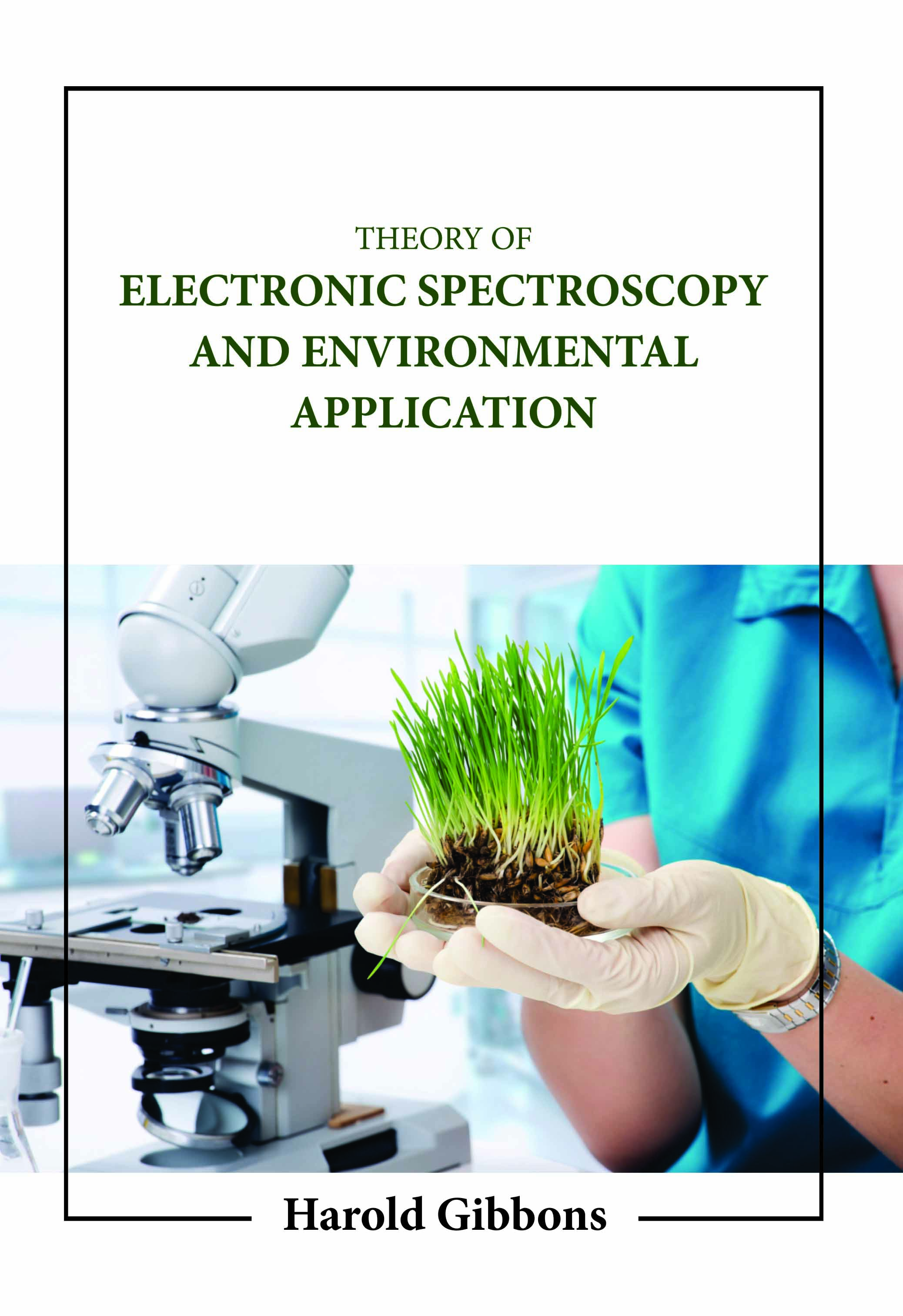
Theory of Electronic Spectroscopy and Environmental Application
by Harold Gibbons
| ISBN | 9781806247851 |
|---|---|
| Publisher | Digital Drive Learning |
| Copyright Year | 2026 |
| Price | $266.00 |
by Harold Gibbons
| ISBN | 9781806247851 |
|---|---|
| Publisher | Digital Drive Learning |
| Copyright Year | 2026 |
| Price | $266.00 |
Electronic spectroscopy is widely used to detect environmental contamination. Environmental applications of electronic spectroscopy involve challenging analytical problems. Both qualitative identification and quantitative determination are performed for analytics which may occur at concentrations ranging from parts per hundred to parts per quadrillion. The analytics occur in a very wide range of matrices. Electronic spectroscopy consists of monitoring the absorption of light by the sample or monitoring the emission of light, often after excitation of the sample by an appropriate light source or laser beam. Both inorganic and organic analytics can be detected. Real-world samples are often complex mixtures, and therefore environmental applications may involve coupling a separation technique with electronic spectroscopy. This book “Theory of Electronic Spectroscopy and Environmental Application” focuses on introducing students to vibrational and electronic spectroscopy, presenting applications of group theory to the interpretation of UV, visible, and infrared spectra without assuming a high level of background knowledge.